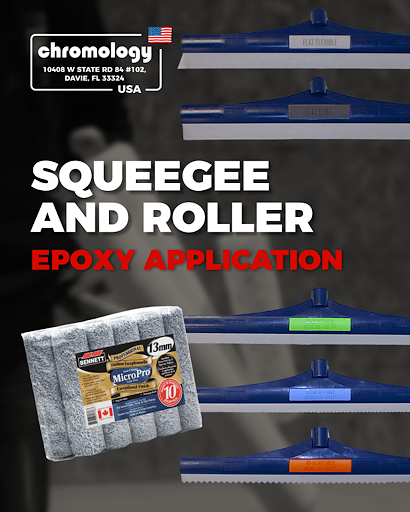

When to use a notched squeegee vs. roller for epoxy applications
Notched Squeegee vs. Roller: When to Use Each for Epoxy Applications
At Chromology Florida East Inc., located at 10408 W State Rd 84, Davie, FL 33324, we help professional installers across South Florida make smart tool choices that lead to flawless epoxy floor installations. One of the most common questions we hear – from first-time contractors to seasoned crews – is simple but critical:
“Should I use a notched squeegee or a roller to apply epoxy?”
The correct answer depends on your system type, square footage, viscosity, and the finish you’re targeting. Using the right tool at the right stage ensures consistent millage, proper leveling, and long-term durability. Using the wrong one can undo an otherwise perfect prep. Let’s break it down.
When to Use a Notched Squeegee
Best for:
- Metallic epoxy systems
- Solid-color epoxy basecoats
- Self-leveling epoxy systems
- Large open areas (warehouses, showrooms, garages)
- High-build applications (10+ mils)
Why it works:
A notched squeegee is designed to deliver material evenly and precisely, controlling film thickness across the entire surface. This makes it the go-to tool when pouring thicker, self-leveling coatings where uniformity matters. It’s especially effective on flat slabs and decorative systems where flow, movement, and leveling are part of the final look.
Use a notched squeegee when you’re:
- Pouring high-build or 100% solids epoxy
- Working across wide, unobstructed floor areas
- Installing metallic or decorative finishes that rely on proper flow
Pro Tip:
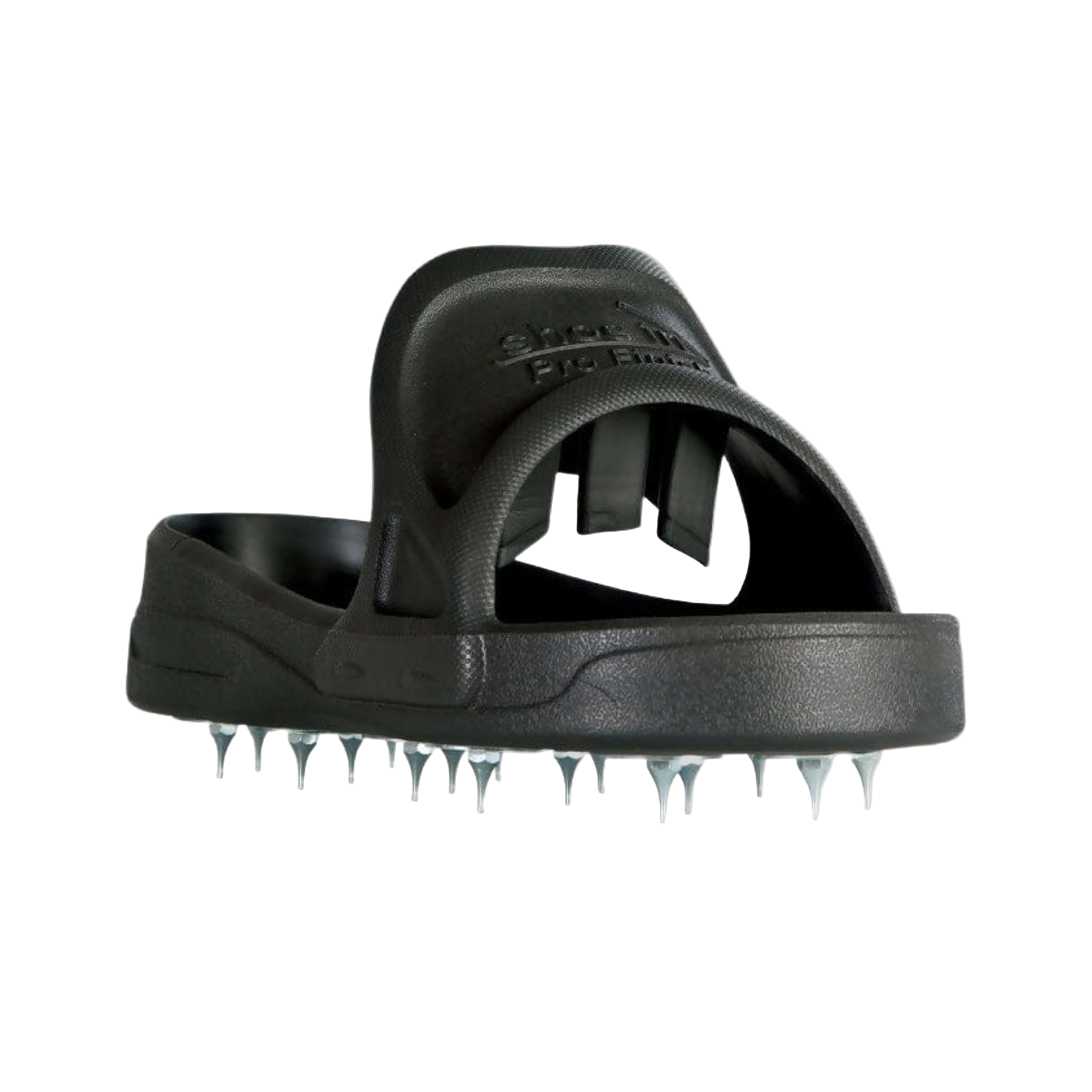
Choose your notch size based on the manufacturer’s specs – typically 1/8", 3/16", or 1/4". Always follow with a spiked roller to release trapped air, help the epoxy self-level, and eliminate bubbles before cure.